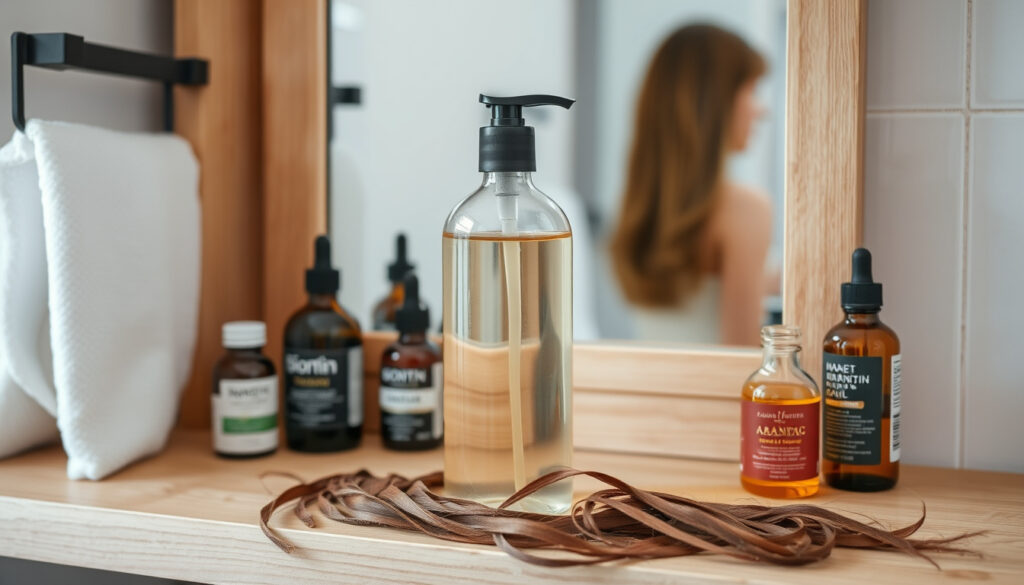
Shampoo for Hair Loss: Expert Guide to Causes & Ingredients
If you’ve been watching more hair than usual swirl down the drain, you’re not alone—hair loss affects millions of people, and the right shampoo can be part of the solution, but only if you know what’s actually causing it. This guide connects the dots between stress, thyroid issues, vitamin gaps, and GLP-1 medications, then matches each cause with shampoo ingredients that dermatologists actually recommend.
Hair loss affects 80 million Americans American Academy of Dermatology ·
Up to 50% of women experience female pattern hair loss American Academy of Dermatology ·
Telogen effluvium occurs in 30-50% after major stress Cleveland Clinic ·
Iron deficiency affects up to 10% of women of childbearing age World Health Organization
Quick snapshot
- Stress can cause temporary telogen effluvium (Cleveland Clinic)
- Iron deficiency is a reversible cause of hair loss (World Health Organization)
- Thyroid disorders commonly cause hair thinning (American Thyroid Association)
- GLP-1 medications can trigger hair loss due to rapid weight loss (Medical News Today)
- Efficacy of biotin supplements for hair growth in non-deficient individuals (PMC review)
- Exact mechanism of cortisol-induced miniaturization (PMC review)
- Long-term effects of GLP-1 on hair cycling (Medical News Today)
- Whether over-the-counter saw palmetto shampoos deliver enough active ingredient (Yates MD)
- Telogen effluvium typically begins 2-3 months after a stress event (Cleveland Clinic)
- Hair regrowth after correcting deficiency usually takes 3-6 months (American Academy of Dermatology)
- Blood test for iron, vitamin D, and thyroid panel to identify underlying cause (American Academy of Dermatology)
- Start with a dermatologist-recommended shampoo targeting your cause (Cleveland Clinic)
Five key facts about hair loss and shampoo ingredients, one pattern: the cause determines the solution.
| Fact | Value |
|---|---|
| Common Causes | Stress, Thyroid, Vitamin Deficiency, GLP-1, Hormonal |
| Prevalence (men) | 50% by age 50 (American Academy of Dermatology) |
| Prevalence (women) | 40% experience female pattern hair loss (American Academy of Dermatology) |
| Effective Shampoo Ingredients | Caffeine, Ketoconazole, Biotin, Saw Palmetto (Cleveland Clinic) |
| First Step | Identify underlying cause with a doctor (American Academy of Dermatology) |
What shampoos are best for hair loss?
Which is the no. 1 shampoo for hair fall?
- There’s no single winner, but brands like Nioxin, Briogeo, and Vegamour appear frequently in dermatologist discussions. Nioxin is often recommended by dermatologists for thinning hair (Cleveland Clinic).
- No shampoo alone stops hair loss—the cause must be addressed.
Dermatologist recommended shampoo for hair loss
- Dermatologists frequently recommend shampoos containing ketoconazole (anti-fungal, scalp health) and caffeine. Dr. Piliang at Cleveland Clinic states that ketoconazole shampoos prevent inflammation and treat dandruff yeast, aiding scalp health for hair production (Cleveland Clinic).
- Other common recommendations: Nioxin system (contains biotin, niacin, zinc) and Rogaine (minoxidil) but used separately.
Shampoo for hair loss female vs male
- Women often need shampoos targeting iron deficiency and hormonal shifts (e.g., postpartum, menopause), while men typically address androgenetic alopecia with DHT-blocking ingredients like saw palmetto (Yates MD).
- Both benefit from caffeine shampoos for follicle stimulation (Ubie Health).
Top ingredients to look for
- Ketoconazole – treats scalp inflammation, dandruff-causing yeast (Cleveland Clinic).
- Caffeine – potential to reduce hair loss (Ubie Health).
- Biotin, collagen, zinc, keratin – strengthen hair and reduce breakage (SkinKraft).
- Saw palmetto – blocks DHT linked to androgenetic alopecia (Yates MD).
- Niacinamide, dexpanthenol, yeast extract – soothe the scalp and create optimal environment for hair growth (Cardon Skin).
The takeaway: match your ingredient to your cause.
The pattern: cause dictates ingredient.
| Brand | Key Ingredients | Price Range | Best For |
|---|---|---|---|
| Nioxin System | Biotin, Niacin, Zinc, Salicylic acid | $15–$25 | Thinning hair, androgenic alopecia (SkinKraft) |
| Rogaine (Minoxidil 5%) | Minoxidil (topical, not shampoo) | $30–$50 | FDA-approved hair regrowth (Healthline) |
| Briogeo Scalp Revival | Tea tree oil, Biotin, Salicylic acid | $30–$40 | Scalp health + thinning hair (SkinKraft) |
| Vegamour GRO Shampoo | Phyto-caffeine, Biotin, Curcumin | $40–$50 | Volumizing and stress-related loss (Healthline) |
What vitamin am I lacking if my hair is falling out?
What supplements are good for Hashimoto’s hair loss?
- Dr. Izabella Wentz, in her book on Hashimoto’s, recommends selenium (especially Brazil nuts) and zinc. Selenium supports thyroid hormone metabolism (PMC review).
- Iron and vitamin D are also critical; test levels first.
Iron deficiency and hair loss
- Iron deficiency is a common reversible cause of hair loss in women. The World Health Organization reports up to 10% of women of childbearing age are deficient (World Health Organization).
- Include iron-rich foods or supplements under medical guidance. Related reading: What Foods Are High in Iron – Top Sources and Absorption Tips.
Zinc and biotin supplements
- Zinc supports hair follicle protein synthesis. Biotin supplements are popular but evidence is limited for those without deficiency (PMC review).
- Biotin is still included in many hair loss shampoos (SkinKraft).
Vitamin D and hair health
- Vitamin D deficiency has been linked to alopecia areata and general hair shedding (PMC review).
- Sunlight and fortified foods are primary sources; supplements can help but only after a blood test.
A woman with unexplained hair loss who skips a blood test may waste time on expensive shampoos. The data shows iron deficiency alone affects 1 in 10 women of childbearing age – a simple test can pinpoint the real fix.
What this means: supplements are only useful when a deficiency exists; testing prevents wasted effort.
Can high cortisol levels cause hair loss?
What are 10 warning signs of high cortisol?
- Fatigue, weight gain (especially abdomen), hair thinning, high blood pressure, anxiety, insomnia, brain fog, cravings, frequent infections, slow wound healing (Cleveland Clinic).
- High cortisol triggers telogen effluvium – up to 50% of hair may shed 2-3 months after major stress.
What hormone deficiency causes hair loss?
- Androgens (e.g., DHT) in men, thyroid hormones in both sexes, and oestrogen decline in menopause. Cortisol is a stress hormone, not a deficiency cause, but chronic elevation is harmful (Cleveland Clinic).
How to lower cortisol for hair growth
- Sleep 7–8 hours, exercise moderately, reduce caffeine intake, practice mindfulness (Healthline).
- Shampoos with rosemary oil or mint can improve scalp circulation (Orgatre).
The catch: managing cortisol requires lifestyle change; shampoo alone cannot reverse stress-induced shedding.
What are the first signs of thyroid hair loss?
What is the one thing you should be eating for your thyroid every morning?
- Dr. Izabella Wentz recommends Brazil nuts (selenium-rich) or a smoothie with selenium and iodine (PMC review).
- Selenium supports conversion of T4 to active T3 thyroid hormone.
Thyroid problems: fluctuating weight and hair loss
- Both hypothyroidism and hyperthyroidism can cause diffuse hair loss (all over the scalp). Weight changes are a common companion (American Thyroid Association).
- Hair loss appears months after thyroid levels drop; once treated, hair usually regrows within 6 months.
Hypothyroidism vs hyperthyroidism hair patterns
- Hypothyroidism: thinning, dry, brittle hair. Hyperthyroidism: fine, soft hair that sheds excessively (American Thyroid Association).
The implication: thyroid-related hair loss often resolves with proper hormone management – no special shampoo needed.
What to do for GLP-1 hair loss?
How to Reverse Hair Loss Caused by GLP1 Weight Loss Medications
- GLP-1 drugs (Ozempic, Wegovy) cause rapid weight loss that can trigger telogen effluvium. Increase protein intake (to 1.2–1.5g per kg of body weight) and consider vitamin B12, iron, and zinc supplements (Medical News Today).
- Use a gentle shampoo with biotin and collagen (SkinKraft).
Supplements for GLP-1 related hair loss
- Multivitamin with iron, zinc, selenium, and vitamin D. Also consider collagen peptides (PMC review).
Adjusting medication with a doctor
- Never stop GLP-1 without consulting an endocrinologist. Hair loss is temporary, but weight rebounding can worsen health (Medical News Today).
What this means: focus on nutrition and medical guidance – shampoo is a supporting player, not the solution.
Pros and cons of common hair loss shampoos
Upsides
- Ketoconazole shampoos reduce scalp inflammation and dandruff, improving hair growth environment (Cleveland Clinic).
- Caffeine shampoos are affordable and widely available (Ubie Health).
- Biotin and keratin strengthen hair shafts, reducing breakage (SkinKraft).
- Natural oils (rosemary, peppermint, aloe) support scalp health (Orgatre).
Downsides
- No shampoo can regrow hair on its own if the cause is hormonal or genetic.
- Many “hair growth” shampoos contain sulfates or harsh detergents that irritate sensitive scalps (Healthline).
- Minoxidil (the only FDA-approved topical) is not a shampoo; requires separate daily application.
- Over-the-counter shampoos with saw palmetto or caffeine may not deliver enough active ingredient to the follicle (Yates MD).
The pattern: shampoos can support but cannot replace medical treatment for underlying causes.
Step-by-step approach to choosing and using a shampoo for hair loss
- Identify the cause: Visit a dermatologist and get blood tests for iron, vitamin D, thyroid panel, and stress markers (American Academy of Dermatology).
- Match ingredients to cause: For inflammation – ketoconazole; for circulation – caffeine; for androgen sensitivity – saw palmetto; for breakage – biotin and keratin (Cleveland Clinic).
- Choose a sulfate-free base: Avoid sulfates, parabens, and formaldehyde (Healthline).
- Shampoo correctly: Massage into scalp for 1–2 minutes, leave in for 2-3 minutes if formula allows, then rinse thoroughly. Use 3-4 times per week (Cleveland Clinic).
- Monitor progress: Take monthly photos. Shedding may increase initially (if using minoxidil), then stabilize. If no improvement in 4 months, revisit the cause.
- Supplement appropriately: Based on test results, add iron, vitamin D, zinc, or selenium under medical supervision (PMC review).
Shampoo alone will not reverse hair loss from low iron or thyroid disease. The first step isn’t buying a fancy shampoo – it’s a $50 panel of blood tests. Without that, you’re guessing.
The takeaway: a systematic approach beats random product trials.
Clarity: confirmed vs. unclear
Confirmed facts
- Stress can cause temporary telogen effluvium (Cleveland Clinic)
- Iron deficiency is a reversible cause of hair loss (World Health Organization)
- Thyroid disorders commonly cause hair thinning (American Thyroid Association)
- GLP-1 medications can trigger hair loss due to rapid weight loss (Medical News Today)
- Ketoconazole and caffeine shampoos have evidence supporting their use (Cleveland Clinic)
What’s unclear
- Efficacy of biotin supplements for hair growth in non-deficient individuals (PMC review)
- Exact mechanism of cortisol-induced miniaturization (PMC review)
- Long-term effects of GLP-1 on hair cycling (Medical News Today)
- Whether over-the-counter saw palmetto shampoos deliver enough active ingredient (Yates MD)
What this means: the evidence base is strong for causes but weaker for some shampoo ingredient claims.
Expert perspectives on hair loss and shampoo
“Ketoconazole shampoos prevent inflammation and treat the dandruff yeast that can interfere with hair production.”
— Dr. Melissa Piliang, dermatologist at Cleveland Clinic (Cleveland Clinic)
“For Hashimoto’s patients, eating Brazil nuts (selenium-rich) first thing in the morning can support thyroid function and reduce hair loss.”
— Dr. Izabella Wentz, author of Hashimoto’s Protocol (PMC review)
“We estimate that 30–50% of people who experience a major stressor will develop telogen effluvium within 2–3 months.”
— Cleveland Clinic, Department of Dermatology (Cleveland Clinic)
The evidence is clear: hair loss is rarely just a shampoo problem. For the person staring at a thinning part line, the real fix lies in a doctor’s office – labs, diagnosis, and targeted treatment. A well-chosen shampoo supports that journey, but it’s not the hero. For Irish readers, Boots and O’Sullivan’s Pharmacy stock ketoconazole and caffeine shampoos; check with your local pharmacist for the right formula.
Related reading: Dandelion Root Tea Benefits – What Science Really Shows (stress and inflammation management).
Frequently asked questions
Is shampoo alone enough to stop hair loss?
No – shampoo addresses the scalp environment and can reduce breakage, but it won’t stop hormonal or deficiency-driven loss. A complete treatment plan is needed (American Academy of Dermatology).
Can hair loss from stress be reversed?
Yes – telogen effluvium is temporary. Once the stress trigger resolves, hair regrows within 6 months (Cleveland Clinic).
How long does it take for hair to grow back after thyroid treatment?
Usually 3-6 months after thyroid levels are normalised (American Thyroid Association).
Do caffeine shampoos work for hair loss?
Some studies suggest caffeine can stimulate hair follicles and reduce the effects of DHT. However, more research is needed (Ubie Health).
Which shampoo is best for post-pregnancy hair loss?
A gentle, biotin-rich, sulfate-free shampoo works well. Postpartum hair loss (telogen effluvium) usually resolves on its own (Cleveland Clinic).
Can hair loss from GLP-1 medications be prevented?
Focusing on adequate protein (1.2-1.5g per kg) and nutrient-dense foods during weight loss can reduce shedding. Hair loss is usually temporary (Medical News Today).
More related posts
 1.88 m in Feet: Exact Conversion & Height Analysis
 2025 MLB Playoff Bracket: Schedule, Format, Champion
 50 F to C (10°C): Formula, Chart & NASA Guide
 Scarlett Johansson: Biography, Children, Net Worth, and More
 David Gilmour: Biography, Net Worth, Health Rumors & More
 Cast of Ransom Canyon – Full Actors List and Character Guide
 Fairmont Jasper Park Lodge – Location and Access Guide
 Danny Phantom: Revival, Cancellation, and Why It’s Still Popular
