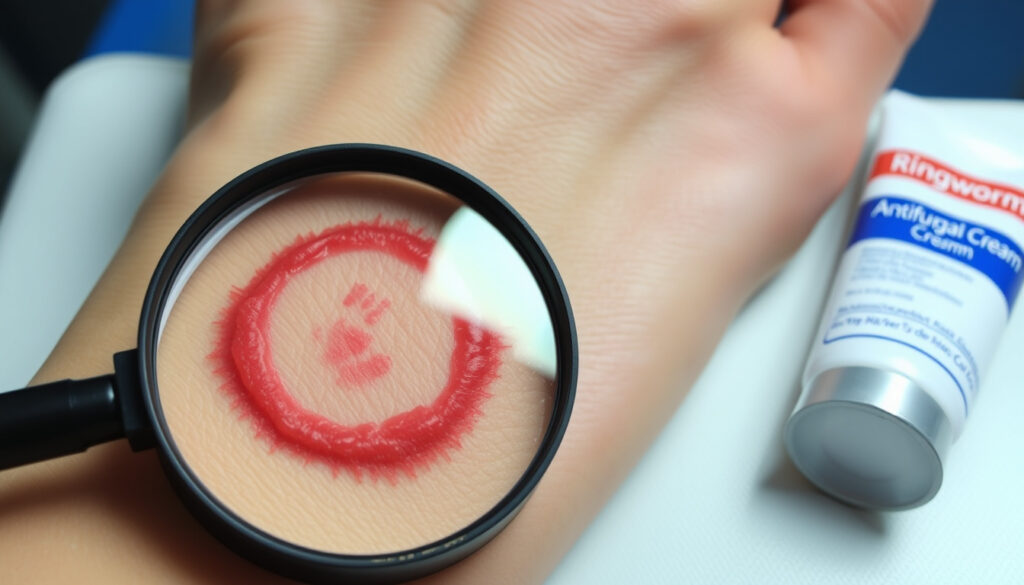
Ringworm on Skin: Causes, Symptoms, Treatment & Prevention
If you’ve ever noticed a red, ring-shaped rash on your skin and wondered if you somehow picked up a worm, you’re not alone — the truth is less alarming but still important: ringworm is a common fungal infection that’s highly treatable. According to the World Health Organization (global health authority), it affects millions of people each year and is caused by dermatophyte fungi — not worms.
Global annual cases: ~20–25% of the world population ·
Common age group: All ages; higher in children ·
Causative organism: Dermatophyte fungi (e.g., Trichophyton) ·
Contagious period: Until rash clears with treatment ·
Treatment duration: 2–4 weeks for typical skin cases
Quick snapshot
- Ringworm is a fungal infection, not a worm (World Health Organization (WHO))
- It spreads through direct contact with infected people, animals, or surfaces (Cleveland Clinic (major academic medical center))
- OTC antifungal creams are effective first-line treatment (U.S. Centers for Disease Control and Prevention (CDC))
- Exact fungal spore survival time on various surfaces is not universally defined
- Effectiveness of home remedies like apple cider vinegar is anecdotal, not clinically proven
- It’s not fully understood why some people get recurrent infections despite good hygiene — individual immune responses may play a role
- Mild cases clear in a few weeks with consistent OTC treatment; severe cases may require 6–12 weeks (Cleveland Clinic (major academic medical center))
- Symptoms appear 4–14 days after exposure (Cleveland Clinic (major academic medical center))
- Start OTC antifungal cream at first sign of rash
- Keep skin clean and dry, wash bedding in hot water
- See a doctor if rash is widespread, on the scalp, or not improving after 2 weeks
Five key facts at a glance, one pattern: ringworm is highly treatable but requires consistent effort.
| Fact | Detail |
|---|---|
| Condition name | Ringworm (tinea corporis) |
| Cause | Dermatophyte fungi |
| Contagious | Yes, until rash clears |
| Typical treatment | 2–4 weeks of antifungal cream |
| Seriousness | Usually mild; severe in immunocompromised |
| Incubation period | 4–14 days after exposure (Cleveland Clinic) |
| Common topical treatments | Clotrimazole, miconazole, terbinafine (WHO) |
| Oral medications (severe cases) | Griseofulvin, terbinafine, itraconazole (WHO) |
What causes ringworm on the skin?
Fungal origins: dermatophytes
- Ringworm is caused by dermatophyte fungi that feed on keratin in skin, hair, and nails (World Health Organization (WHO)).
- These fungi are adapted to live on the surface, not deep tissues (Children’s Hospital Los Angeles (pediatric health system)).
Direct contact transmission
- The infection spreads through skin-to-skin contact with an infected person or animal (Cleveland Clinic).
- It can also spread by touching contaminated surfaces like towels, bedding, or gym equipment (WHO).
Environmental and animal sources
- Fungi thrive in warm, moist environments such as locker rooms and pool areas.
- Pets — especially cats and dogs — can carry ringworm and transmit it to humans (WHO).
The pattern: Understanding the cause helps you take targeted prevention steps.
What are 5 symptoms of ringworm?
Circular red rash
- The classic sign is a ring-shaped, red, raised patch with a clearer center — often mistaken for a worm under the skin (Harvard Health Publishing (Harvard Medical School)).
- The rash can appear on the arms, legs, trunk, or other body areas.
Itching and scaling
- Intense itching is common, especially at the active edges of the ring.
- The skin may become scaly, flaky, or cracked (WHO).
Blisters and oozing
- In some cases, small blisters or oozing sores develop along the ring.
- Scratching can lead to secondary bacterial infections, so keep the area clean (Cleveland Clinic).
What this means: Early recognition of symptoms allows for prompt treatment and reduces spread.
How do I get rid of ringworm on my skin?
Most people with ringworm can treat it at home with OTC antifungal creams — no prescription needed. But consistency is everything: skipping doses can prolong the infection.
Over-the-counter antifungal creams
- First-line treatment: creams containing clotrimazole, miconazole, or terbinafine (WHO).
- Apply to the rash and a small border of healthy skin for 2–4 weeks, even after the rash fades (CDC).
Prescription medications
- Oral antifungals like griseofulvin, terbinafine, or itraconazole are used for widespread, severe, or treatment-resistant ringworm (WHO).
- Prescription creams with stronger ingredients may also be prescribed if OTC options fail.
Home care and hygiene
- Keep the affected area clean and dry — moisture helps fungi grow (WHO).
- Wash towels, bedding, and clothes in hot water with detergent to kill spores (Cleveland Clinic).
- Avoid scratching; cover the rash with a bandage if needed.
The catch: Even with proper treatment, ringworm can take weeks to fully clear. Patience and continued hygiene are key to preventing reinfection.
What kills ringworm quickly?
Fastest antifungal options
- Terbinafine cream (e.g., Lamisil) may resolve mild cases in as little as 1–2 weeks (CDC).
- No medication provides an instant cure; consistent daily application is essential.
Duration of treatment
- CDC recommends applying antifungal cream for the full 2–4 weeks, even if the rash appears gone earlier.
- Mild cases: a few weeks. Severe or persistent cases: 6–12 weeks (Cleveland Clinic).
Speed of symptom relief
- Itching may improve within a few days of starting treatment.
- The visible rash fades gradually; complete clearing can take several weeks.
The implication: You must complete the full course even if symptoms improve.
Is ringworm related to hygiene?
Hygiene myths
- Poor hygiene increases the risk but is not the sole cause — anyone can get ringworm.
- The “dirty” stigma is unwarranted; ringworm is incredibly common and not a sign of being unclean (Harvard Health Publishing).
Risk factors
- Close contact with infected people or animals is the primary risk factor.
- Warm, humid conditions (e.g., sweaty gym clothes, tight shoes) create a breeding ground for dermatophytes.
Prevention through cleanliness
- Good hygiene helps prevent spread: shower after exercise, dry thoroughly, wear clean clothes (WHO).
- Avoid sharing towels, combs, or sports equipment (WHO).
The pattern: Ringworm doesn’t discriminate by cleanliness — but good hygiene is your best defense once you’re exposed.
Does ringworm live on bed sheets?
Contaminated fabrics and surfaces
- Yes, dermatophyte fungi can survive on bedding, towels, and clothing (Cleveland Clinic).
- Spores can remain viable for months on fabrics, especially in warm, humid environments.
Cleaning and disinfection
- Wash all potentially contaminated items in hot water (at least 140°F/60°C) with laundry detergent and bleach if safe for the fabric (CDC).
- Dry on the highest heat setting to kill remaining spores.
Preventing reinfection
- Avoid sharing sheets, towels, or clothing with others until the rash has cleared.
- Regularly clean shared surfaces like gym mats and shower floors.
The trade-off: You can’t “catch” ringworm from your own sheets after treatment, but failing to clean them can reinfect you or spread it to family members.
Are ringworms serious?
When ringworm is serious
- In healthy individuals, ringworm is usually mild and self-limiting with treatment.
- For immunocompromised people (e.g., those on chemotherapy or with HIV), it can become widespread and severe (WHO).
Complications
- Secondary bacterial infections from scratching can occur.
- If it spreads to the scalp or nails, treatment becomes more intensive and may require oral medication.
When to see a doctor
- Seek medical care if: the rash is widespread, on the scalp, or during pregnancy (Cleveland Clinic).
- Also see a doctor if the rash hasn’t improved after 2 weeks of OTC treatment.
Why this matters: Ringworm is rarely dangerous, but ignoring it can lead to longer treatment, scarring, or spread to vulnerable people in your household.
Step-by-step: How to treat ringworm on skin
- Confirm it’s ringworm. Look for a red, ring-shaped, itchy rash. If unsure, visit a dermatologist for a scraping test.
- Buy an OTC antifungal cream. Choose one containing terbinafine, clotrimazole, or miconazole.
- Apply the cream correctly. Clean and dry the area, then apply a thin layer covering the rash plus about 1 cm of surrounding skin. Do this once or twice daily as directed.
- Continue for the full course. Use the cream for 2–4 weeks, even if the rash disappears earlier — stopping early can cause recurrence.
- Wash everything. Clean all bedding, towels, and clothes you used in hot water with detergent. Dry on high heat.
- Keep skin dry. After showers, pat dry with a clean towel. Change socks and underwear daily.
- Monitor for improvement. Itching should ease in a few days; the rash gradually fades. If no improvement in 2 weeks, see a doctor.
Treating ringworm is straightforward, but the most common mistake is quitting too early. Stick with the full 2–4 week regimen — your skin will thank you.
The takeaway: Following these steps consistently leads to successful resolution.
Clarity: What we know and what’s uncertain
Confirmed facts
- Ringworm is caused by fungi, not worms (WHO).
- It spreads through direct contact (Cleveland Clinic).
- OTC antifungal creams are effective first-line treatment (CDC).
What’s unclear
- The exact duration fungal spores survive on different surfaces is not universally defined.
- According to Doctor O’Donovan (YouTube channel), some people report success with home remedies like apple cider vinegar, but clinical evidence is anecdotal.
- It’s not fully understood why some people get recurrent infections despite good hygiene — individual immune responses may play a role.
The bottom line: Ringworm is well-understood, but individual variability remains.
Expert perspectives
Ringworm is easily treated with over-the-counter antifungal creams. The key is to apply them consistently for the full duration, even after the rash looks better. Stopping early is the number one reason it comes back.
— U.S. Centers for Disease Control and Prevention (CDC) guidelines on ringworm treatment
The classic ring-shaped rash with a clear center is very distinctive. But ringworm can also appear as red, scaly patches without the ring, especially on the groin or feet. If you’re not sure, a doctor can scrape a little skin and look at it under a microscope.
— Mayo Clinic expert on tinea corporis symptoms and diagnosis
Ringworm is highly contagious until the rash resolves. That means you should avoid sharing towels, clothing, or sports equipment during treatment.
— Cleveland Clinic (major academic medical center) on ringworm transmission
The consensus: Expert sources agree that consistent treatment and hygiene are key.
Summary
Ringworm is a common, treatable fungal infection — not a worm and not a sign of poor hygiene. With consistent use of OTC antifungal creams and careful hygiene, most people see the rash clear in 2–4 weeks. For anyone dealing with a ringworm rash, the path is straightforward: start treatment promptly, keep skin clean and dry, and wash bedding in hot water. Ignore the stigma, and don’t skip the full course — or you’ll be back at square one.
Understanding how ringworm is transmitted can help you take the right precautions to avoid infection.
Frequently asked questions
How long is ringworm contagious?
Ringworm is contagious from the first appearance of the rash until the infection has completely cleared — typically after 2–4 weeks of treatment. The CDC states that as long as the rash is present, you can spread it to others through direct contact.
Can ringworm go away on its own?
In some mild cases ringworm may resolve without treatment, but it can take many months. Treatment speeds recovery and reduces the risk of spreading it to others. The WHO recommends using antifungal medication for all cases.
Is ringworm the same as athlete’s foot?
Athlete’s foot (tinea pedis) is a type of ringworm that affects the feet. The same fungi cause both, and the treatment is similar — topical antifungals. The difference is the location and sometimes the formulation (powders for feet, creams for the body).
Can you get ringworm from a pet?
Yes, animals — especially cats, dogs, and rodents — can carry dermatophyte fungi. The WHO advises having pets checked and treated by a veterinarian if they show signs of ringworm (patches of missing fur, scaly skin).
What happens if ringworm is left untreated?
Untreated ringworm can persist for months, slowly expanding the rash. In immunocompromised individuals, it can become widespread and cause secondary bacterial infections. It may also spread to the scalp or nails, requiring oral medication.
Can ringworm spread to other parts of the body?
Yes, if you scratch the infected area and then touch another part of your body, you can spread the infection. This is why hand-washing and not sharing towels are important measures during treatment.
Is ringworm more common in children?
Ringworm is common in all age groups but appears more frequently in school-age children, probably due to close contact in schools and shared items. The WHO notes that tinea capitis (scalp ringworm) is especially common in children.
Understanding these FAQs helps address common concerns.
Related reading
- Shampoo for Hair Loss: Expert Guide to Causes & Ingredients
- Symptoms of Cervical Cancer: Early Warning Signs
For further information, explore these related topics.
More related posts
 105 USD to CAD: Real Cost to Convert to Canadian Dollars
 Fuji Mountain: Height, Facts, and Active Volcano Guide
 Shoppers Drug Mart Moncton: Locations, Hours & Flyers
 Anna Kendrick: Relationships, Children, and Career
 The Last Dinner Party: Members, Controversy, Tour, Album
 The Boy, the Mole, the Fox and the Horse: Meaning & Quotes
 С днем рождения женщине: 100+ Beautiful Birthday Wishes
 What Harry Potter House Are You In – Sorting Hat Quiz Guide
