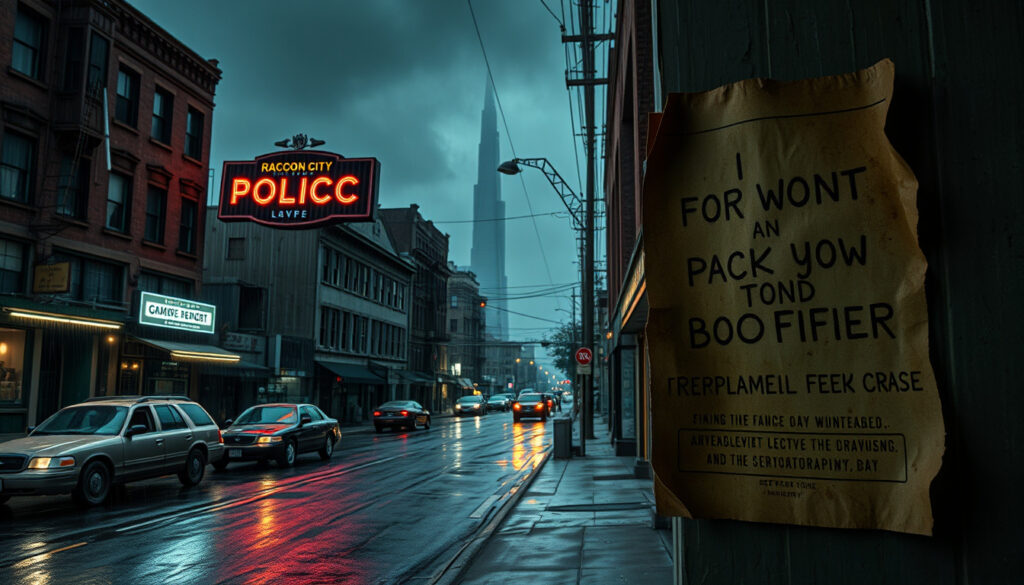
Resident Evil: Welcome to Raccoon City: Reviews, Why It Flopped
Resident Evil: Welcome to Raccoon City (2021) flopped at the box office with a 31% critic score while earning a 65% audience score—a 34-point gap revealing the divide between casual viewers and game fans. The film grossed $41.8 million against a $25 million budget, prompting an early 2022 reboot plan and fueling sequel rumors around Umbrella Chronicles.
Release Year: 2021 · Setting: 1998 · Adapts Games: Resident Evil 1 & 2 · Key Event: Zombie outbreak in Raccoon City · Streaming: Available on Netflix
Quick snapshot
- 31% Rotten Tomatoes critic score (SlashFilm analysis)
- 65% Rotten Tomatoes audience score (SlashFilm analysis)
- $41.8M box office on $25M budget (Bloody Disgusting editorial)
- C+ CinemaScore on opening weekend (SlashFilm analysis)
- Whether Umbrella Chronicles is officially confirmed or still rumor-based
- Exact regional box office breakdown
- Whether director Johannes Roberts will be involved in future films
- New franchise reboot in development for 2026
- Third overall attempt after two underperforming films
- Netflix series cancelled—fresh start still needed
Key details about the 2021 film:
| Detail | Value |
|---|---|
| Release Date | November 2021 |
| Director | Johannes Roberts |
| Setting Year | 1998 |
| Basis | Resident Evil games 1 & 2 |
| Key Location | Raccoon City |
Why watch it
- Faithful to the original game story and setting
- Available on Netflix for easy streaming access
- Offers genuine horror vibes closer to the games than Anderson films
- Some game fans appreciate the source material accuracy
Why skip it
- Critics scored it 31%—the lowest in the franchise
- Overcrowded script sacrificed character development
- Cheap CGI and B-horror dialogue drew complaints
- C+ CinemaScore indicates audience disappointment
Is Welcome to Raccoon City that bad?
The critical consensus was not kind. Rotting Tomatoes critics scored it 31%, with the aggregate noting it as “an affectionately faithful adaptation that further proves its source material is ill-suited to the big screen” (Rotten Tomatoes consensus). Yet the audience score tells a different story—65% of viewers who bought tickets on opening weekend gave it a passing grade (SlashFilm analysis).
Critical reception
Critics on Rotten Tomatoes were divided between acknowledging game fidelity and condemning execution. The consensus recognized the attempt to honor source material while questioning whether live-action translation was the right vehicle. Audiences who actually played the games, however, showed more tolerance—willing to overlook production shortcomings in exchange for something that felt connected to the original experience.
Audience reactions
The CinemaScore tells the full story of that divide. Viewers gave the film a C+ on opening weekend, a notably lower grade than the B CinemaScore Paul W.S. Anderson’s Resident Evil films routinely earned (SlashFilm analysis). That gap reflects more than preference—it points to a fundamental tonal shift. Where Anderson built action-driven spectacles around Milla Jovovich’s star power, Roberts stripped the franchise down to horror vibes that felt closer to the games but alienated franchise fans expecting that signature spectacle.
Common complaints
Metacritic user reviews consistently call out cheap CGI, B-horror movie dialogue, and pacing problems—while simultaneously noting the adaptation’s accuracy to the source games (Metacritic user reviews). Reddit users captured the frustration succinctly: “Very bad acting, terrible writing, actors don’t match, pacing all over the place.” The paradox is that the same qualities that drew criticism from casual viewers are what some game fans point to as the adaptation’s saving grace.
The catch: game fidelity and good filmmaking are not the same thing, and critics consistently punished the film for the latter.
Critics scored it 31% while audiences gave it 65%—a 34-point gap suggesting the film satisfied its core game audience more than casual viewers. The SlashFilm analysis attributes part of this divide to the shift from action-oriented to horror-focused storytelling.
Why did Resident Evil: Welcome to Raccoon City flop?
The box office math is stark: $41.8 million gross on a $25 million budget, the lowest financial return in franchise history (Bloody Disgusting editorial). That poor return on investment triggered immediate franchise recalibration. Plans for a new reboot began in early 2022, less than three months after theatrical release, according to Wikipedia reporting on the 2026 film timeline.
Box office performance
The financial underperformance wasn’t random—it reflected structural problems baked into the production. The franchise had conditioned audiences over six films to expect high-octane action and Milla Jovovich’s presence. Raccoon City delivered neither. The absence of recognizable star power hurt marketing appeal, and the horror-focused tone felt like a bait-and-switch for fans who had supported the Anderson films.
Production challenges
Bloody Disgusting’s editorial analysis identifies the core problem: attempting to adapt two full Resident Evil games (the first and second) into a single film resulted in “rushed adaptation” that sacrificed depth and character development (Bloody Disgusting editorial). The overcrowded script meant nothing got proper breathing room—not the characters, not the horror set pieces, not the lore that made the games compelling. Additionally, the story’s scope left no room to properly introduce Nemesis, one of the franchise’s most iconic antagonists.
Marketing factors
The tonal shift compounded the marketing problem. Previous films had built their audience around action spectacle, and the promotional materials for Raccoon City emphasized horror authenticity over crowd-pleasing entertainment. The disconnect between audience expectations and actual content damaged opening-weekend performance and poisoned word-of-mouth.
What this means: the film chose accuracy over accessibility, and the box office punished that artistic choice.
The $41.8M return on $25M spent left the franchise with no choice but to pivot. Wikipedia documents that reboot planning began in early 2022—less than three months after theatrical release.
Is there a new resident evil movie coming out in 2026?
Yes. A new Resident Evil film is in development for 2026, marking the second reboot and eighth overall installment in the franchise (Wikipedia). This represents the franchise’s third attempt at a live-action relaunch following the Anderson era and the 2021 Raccoon City film.
Upcoming film details
Zach Cregger is attached to direct, with production involving Constantin Film, Vertigo Entertainment, and PlayStation Productions as co-production partners. The cast includes Austin Abrams, Paul Walter Hauser, Zach Cherry, and Kali Reis. This is a complete creative restart—the film has no connection to previous entries and will tell its own story within the Resident Evil universe.
Connection to Welcome to Raccoon City
Despite the sequel rumors around Umbrella Chronicles—a potential follow-up that received $2 million in funding from the Northern Ontario Heritage Fund Corporation (JoBlo report)—the franchise moved in a different direction. Rather than continuing from Raccoon City’s foundation, the 2026 film starts fresh. Director Johannes Roberts had expressed interest in adapting Code: Veronica and later Resident Evil 4 for sequels, but those plans never advanced.
Release status
The film remains in development with a 2026 target release date. Given the franchise’s history of delays and pivots, that timeline could shift, but the announced production team and creative direction suggest this is further along than typical early-stage announcements.
The pattern: each failed Resident Evil film triggers a faster reset. The Anderson era lasted six films over 15 years. Raccoon City got less than three months before plans changed. The 2026 reboot is the franchise admitting it hasn’t found the formula yet.
While Umbrella Chronicles received $2M in funding (JoBlo report), there’s no official confirmation it’s moving forward. The 2026 film is the only officially announced project—game fans should watch that before getting invested in sequel speculation.
What is the correct order to watch the Resident Evil movies?
The franchise now spans three distinct eras with no single continuity: the six Paul W.S. Anderson films (2002–2017), the Netflix series (2022, cancelled), and the upcoming 2026 reboot. Welcome to Raccoon City stands apart as the only film that adapts the original game story rather than continuing the Anderson narrative.
Release order
The Anderson films established the franchise’s mainstream identity: Resident Evil (2002), Resident Evil: Apocalypse (2004), Resident Evil: Extinction (2007), Resident Evil: Afterlife (2010), Resident Evil: Retribution (2012), and Resident Evil: The Final Chapter (2017). These films built their own continuity and can be watched as a standalone series.
Chronological order
Within the Anderson universe, chronology matches release order—the story follows the same progression in both timelines. The Netflix series exists in a separate continuity set after the events of Resident Evil (2002) with an aging Umbrella Corporation and bioweapon outbreaks in post-apocalyptic settings. For more on the actress’s filmography, check out Jennifer Lawrence films.
Where Welcome to Raccoon City fits
The 2021 film adapts the first two Resident Evil games, covering the 1998 zombie outbreak in Raccoon City and the Spencer Mansion origins. It shares no continuity with the Anderson films and functions as a standalone origin story—the only live-action attempt to tell the games’ original narrative.
The viewing implication: fans wanting the complete story should watch Raccoon City separately from the Anderson series, as they exist in parallel universes.
Is Welcome to Raccoon City connected to Resident Evil?
Yes, but only to the game series—not to the Paul W.S. Anderson film universe. Welcome to Raccoon City adapts the first two Resident Evil games, telling the 1998 origin story with the Spencer Mansion, the initial T-virus outbreak, and the destruction of Raccoon City.
Game adaptations
The film draws directly from Resident Evil (1996) and Resident Evil 2 (1998), incorporating key characters like Jill Valentine, Chris Redfield, Leon S. Kennedy, and Claire Redfield. It recreates iconic locations including the Spencer Mansion and the Raccoon City Police Department.
Previous films
The Anderson films created their own mythology, introducing Alice as the protagonist and diverging significantly from game lore. Welcome to Raccoon City ignores this continuity entirely, treating the games as its sole source material.
Shared universe
There is no shared universe between the Anderson films, the Netflix series, and Welcome to Raccoon City. Each represents a separate attempt to translate the franchise to live-action, with the 2026 reboot representing yet another fresh start.
The consequence: viewers expecting connections to previous films will find none—Welcome to Raccoon City stands alone as a game faithful but franchise disconnected adaptation.
“"A clear picture is beginning to form around ‘Resident Evil: Welcome To Raccoon City’ and why it flopped."”
“"‘Resident Evil: Welcome to Raccoon City’ is worse than a bad movie; it’s a mediocre movie that had the potential to be fantastic."”
Related reading: The Last of Us · Avatar Way of Water
Resident Evil: Welcome to Raccoon City aimed to revive survival horror roots, though its plot, cast, and reviews reveal mixed critical and audience reactions.
Frequently Asked Questions
What is Resident Evil: Welcome to Raccoon City about?
The 2021 film adapts the first two Resident Evil games, set in 1998 when a zombie outbreak devastates Raccoon City. Survivors including Jill Valentine, Chris Redfield, Leon S. Kennedy, and Claire Redfield navigate the Spencer Mansion and city streets as Umbrella Corporation’s experiments escape containment.
Who is in the cast of Resident Evil: Welcome to Raccoon City?
The cast features Kaya Scodelario as Claire Redfield, Robbie Amell as Chris Redfield, Avan Jogia as Leon S. Kennedy, and Hannah John-Kamen as Jill Valentine. The ensemble attempts to bring the game characters to life, though critics noted mismatches between actors and their source material.
Where can I watch Resident Evil: Welcome to Raccoon City?
The film is available on Netflix for streaming subscribers. It had a brief theatrical run in November 2021 before transitioning to digital and streaming platforms.
Will there be a Resident Evil: Welcome to Raccoon City 2?
Umbrella Chronicles emerged as a rumored sequel project, receiving $2 million in funding from the Northern Ontario Heritage Fund Corporation. However, there is no official confirmation the sequel is moving forward. The 2026 franchise reboot represents the officially announced next step for the series.
How does the 2026 Resident Evil film differ from Welcome to Raccoon City?
The 2026 film directed by Zach Cregger represents a complete creative restart with no connection to Welcome to Raccoon City. It involves a new production team including Constantin Film, Vertigo Entertainment, and PlayStation Productions, with a cast led by Austin Abrams, Paul Walter Hauser, Zach Cherry, and Kali Reis.
What caused the Resident Evil: Welcome to Raccoon City box office failure?
The film earned $41.8 million against a $25 million budget—the lowest return in franchise history. Analysts cite the shift from action-oriented storytelling to horror authenticity as alienating fans conditioned by the Anderson films, combined with an overcrowded script that sacrificed character development.
How does Welcome to Raccoon City compare to the Netflix Resident Evil series?
Both the Netflix series (2022) and Welcome to Raccoon City failed commercially and critically, though through different means. The Netflix series was cancelled after one season, while Raccoon City earned $41.8M but still represented a franchise low. Some observers consider Raccoon City the more successful of the two adaptations.
More related posts
 Nate Bargatze Biography: Net Worth, Clean Comedy & Tours
 John Paul Tremblay: Net Worth, Biography & Trailer Park Boys
 September 2025 Direct Deposit Payments: Ireland Tax Dates
 Prince Michael Jackson II: Bio, Net Worth, and Legal Disputes
 Gran Muthu Almirante Beach Resort: Cuba Luxury Hotel Guide
 Amrinder Gill: Biography, Sons, Net Worth & 2025 Updates
 6 USD to CAD – Current Rate and Best Conversion Tips
 Scott McGillivray: Wife, Net Worth, Boy Band & Current Projects
